On 14 and 15 April 2026, one hundred water professionals gathered at the Marnewaard for an intensive two-day training, organised by STOWA, The Dutch Ministry of Defence and CTW (Crisis Expert Team Flood Defences) within the framework of the Interreg project BONSAI. During this practice-oriented exercise, a range of innovative emergency response measures for failures were deployed and tested: from mobile flood barriers to slope reinforcement fabrics, from boxing-in seepage wells to sandbag science.
Bonsai- Partners together with participants from the Netherlands and abroad worked together, learned from each other and had the opportunity to practice in a wet field environment with techniques that can make the difference in crisis situations. Evaluators joined throughout, collected experiences, and are working on an evaluation report that will be available shortly.
BONSAI: working on crisis and disaster management
Within the BONSAI project, these trainings fall under Work Package 2 and Work Package 3, focused on crisis management and disaster management. The goal: to better prepare water managers for extreme situations by allowing them to practice with innovative and proven emergency response measures for failures.
A unique location: training on military grounds
The Marnewaard, a military training site in the province of Groningen, has for several years served as the setting for flood safety trainings. Thanks to the collaboration between the Dutch Ministry of Defence and STOWA, water managers can train here under special conditions in an environment that is both challenging and realistic.
This Bonsai test site features a purpose-built water basin of 40 by 40 metres, surrounded by a levee. Previous trainings at this location included:
- Marnewaard I (March 2023): creating a controlled breach using explosives
- Marnewaard II (September 2024): safe rope-assisted working and sealing simulated beaver burrows
Marnewaard
III built on these experiences and added new elements
What was practised?
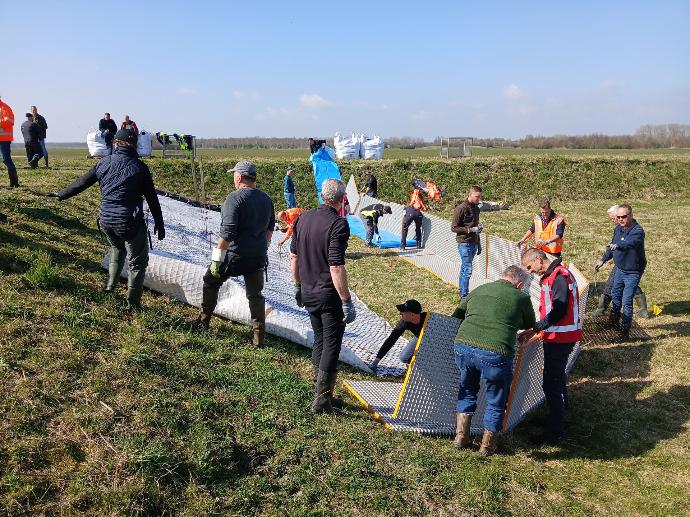
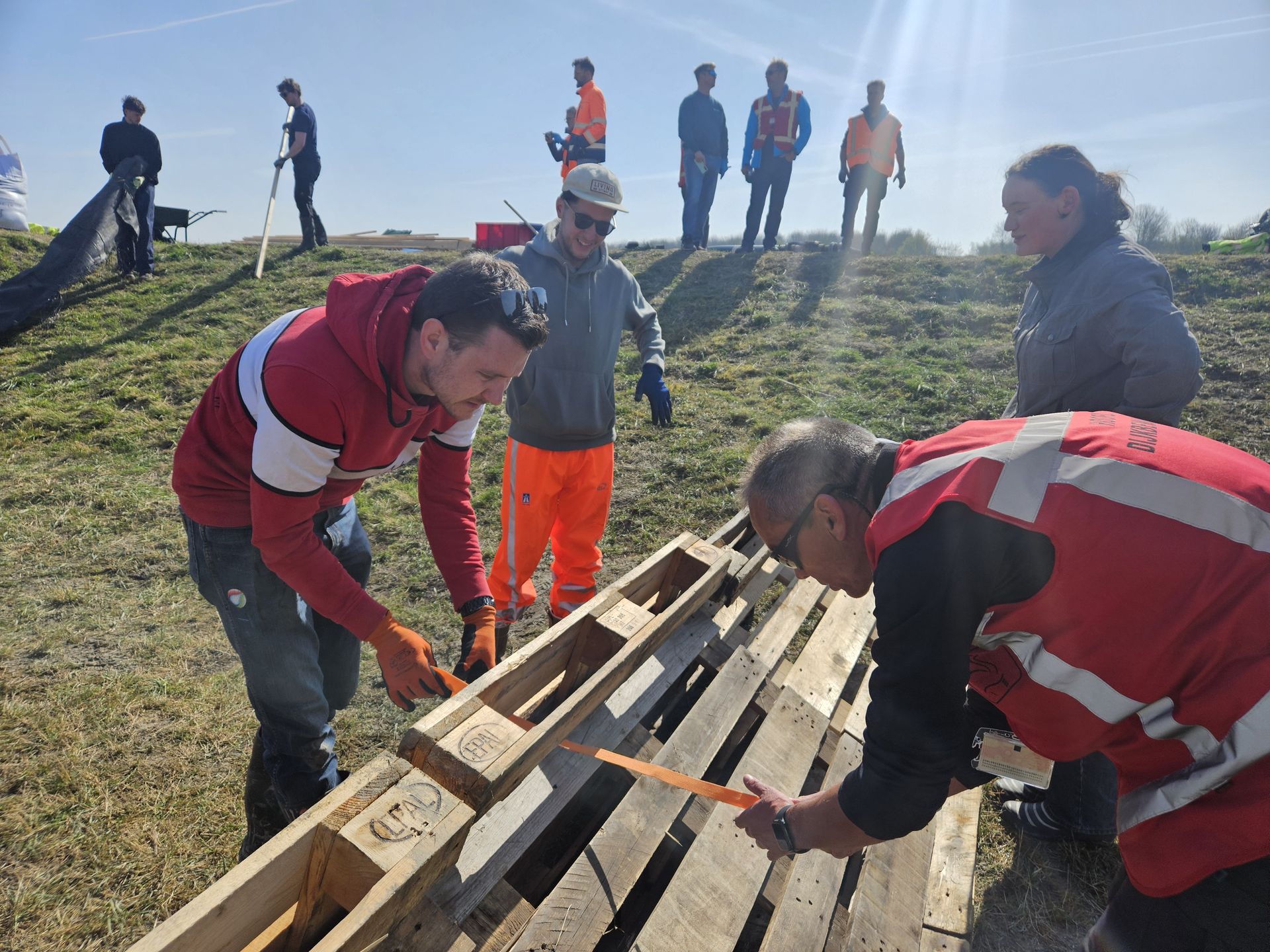
The training consisted of a rotating programme in which participants worked in small groups on various emergency response measures for failures. The emphasis was on realism: uneven ground, mud, awkward angles and time pressure. Each station began with an explanation of the how and why of the measure.
1. Testing mobile flood barriers
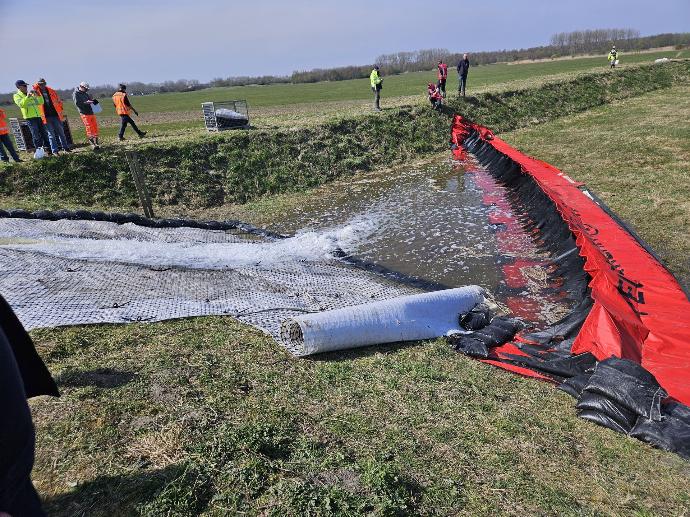
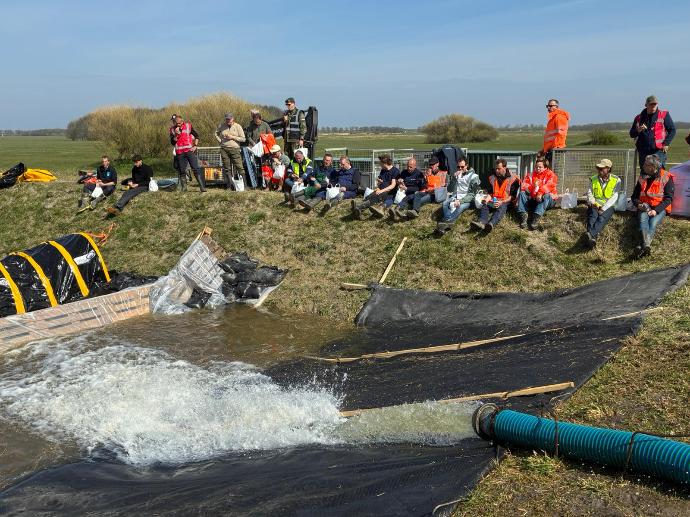
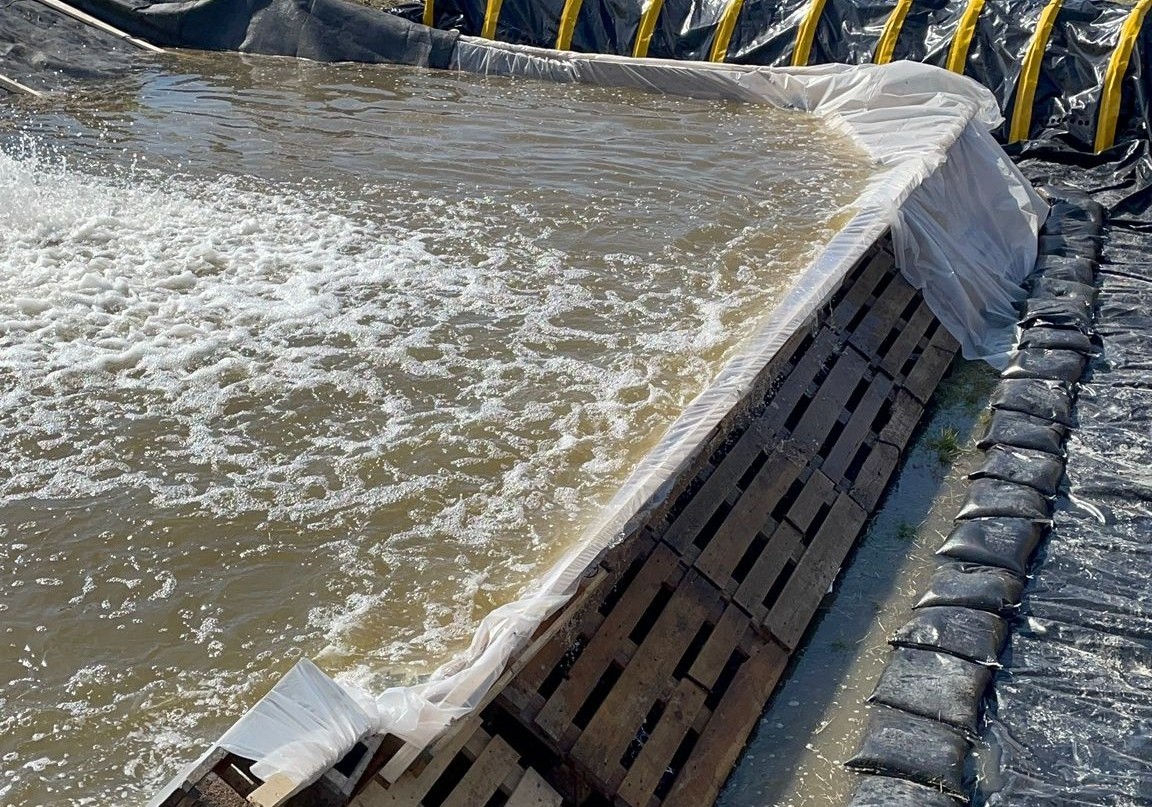
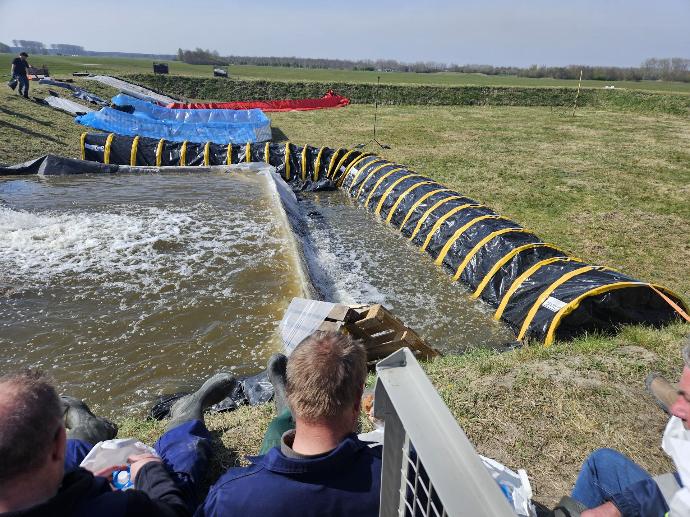
Systems from Buitink, Tube Barrier, Haawal and wooden pallets were deployed, connected and tested. The focus was on:
- functioning on uneven ground
- stability under water pressure
- efficient construction, dismantling and cleaning
Mobile flood barriers are versatile tools that can be deployed in four distinct ways: 1. to add height to an existing flood defence, 2. as a second line of defence positioned behind the primary barrier, 3. across a watercourse to seal it off, or 4. at ground level to guide water in the right direction.
2. Applying and testing slope reinforcement fabrics
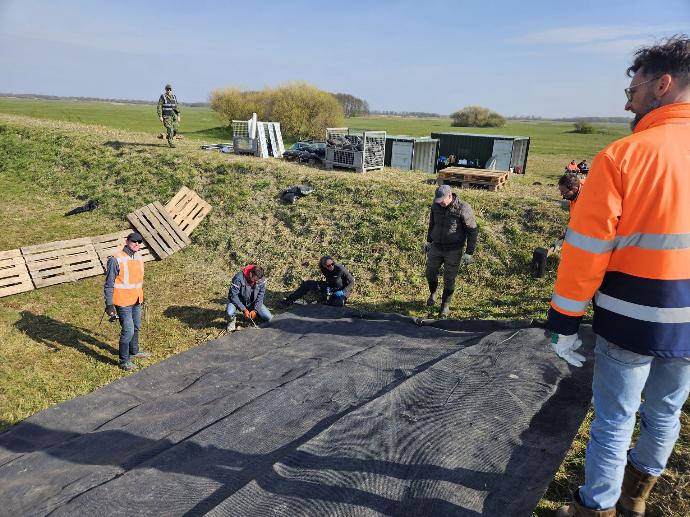
Various fabrics and pins were used to cover levee sections. These were also loaded with water and subsequently cleared, providing insight into effectiveness and practicality.
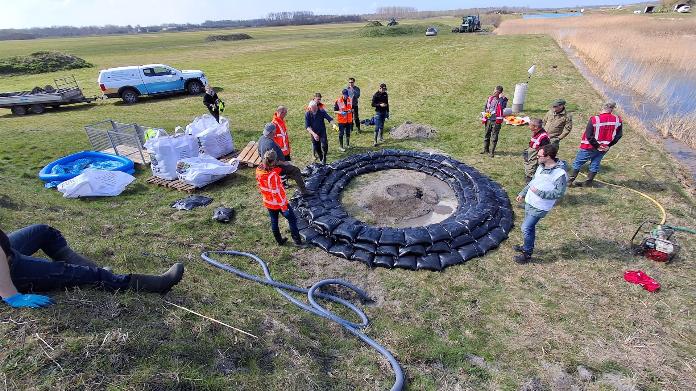
3. Boxing-in seepage wells — traditional and innovative
Participants practised with various methods, including:
- classical boxing-in techniques
- a seepage well mattress
- a piping plug
This created a valuable comparison between existing and new solutions.
4. Sandbag science
Using the STOWA sandbag science booklets, participants practised intensively in:
- efficient moving
- correct placement
- working together under pressure
Learning by doing
Evaluators collected feedback and experiences to further improve the methods. Participants indicated that the training was highly instructive — not only because of the techniques themselves, but also through the collaboration, testing under realistic conditions, and experiencing the physical and logistical challenges that emergency response measures bring with them.
Outlook: Marnewaard IV and V
The next training days are already planned:
- 3 and 4 (5) November 2026
- April 2027
Consideration is being given to inviting managers and policy-makers, so that they too can see and experience what happens in the field and what challenges are involved.
Evaluation and knowledge sharing
A core objective of BONSAI is that knowledge does not stay within the project — it reaches the people who need it most. Already during these field days, evaluation and knowledge sharing were actively taking place, with direct dissemination and implementation to crisis organisations. To further build on this, an evaluation report will be shared within: :
- the BONSAI project
- STOWA
- the CTW community
- the Wiki Noodmaatregelen (Emergency Measures Wiki) website
In this way, the knowledge gained remains available to everyone working on flood safety.
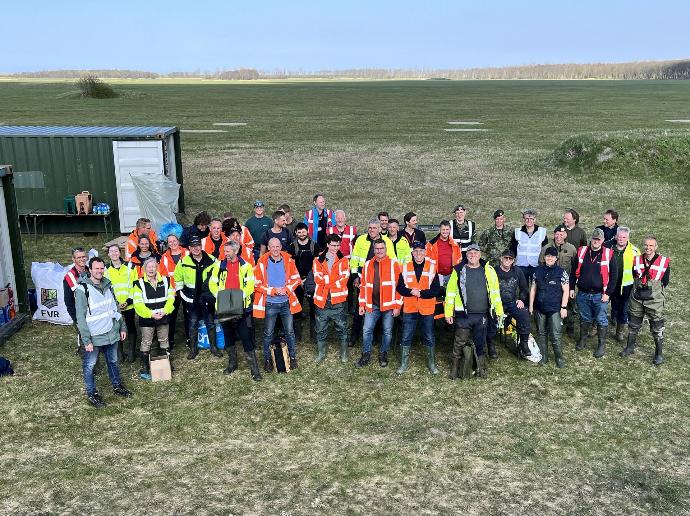
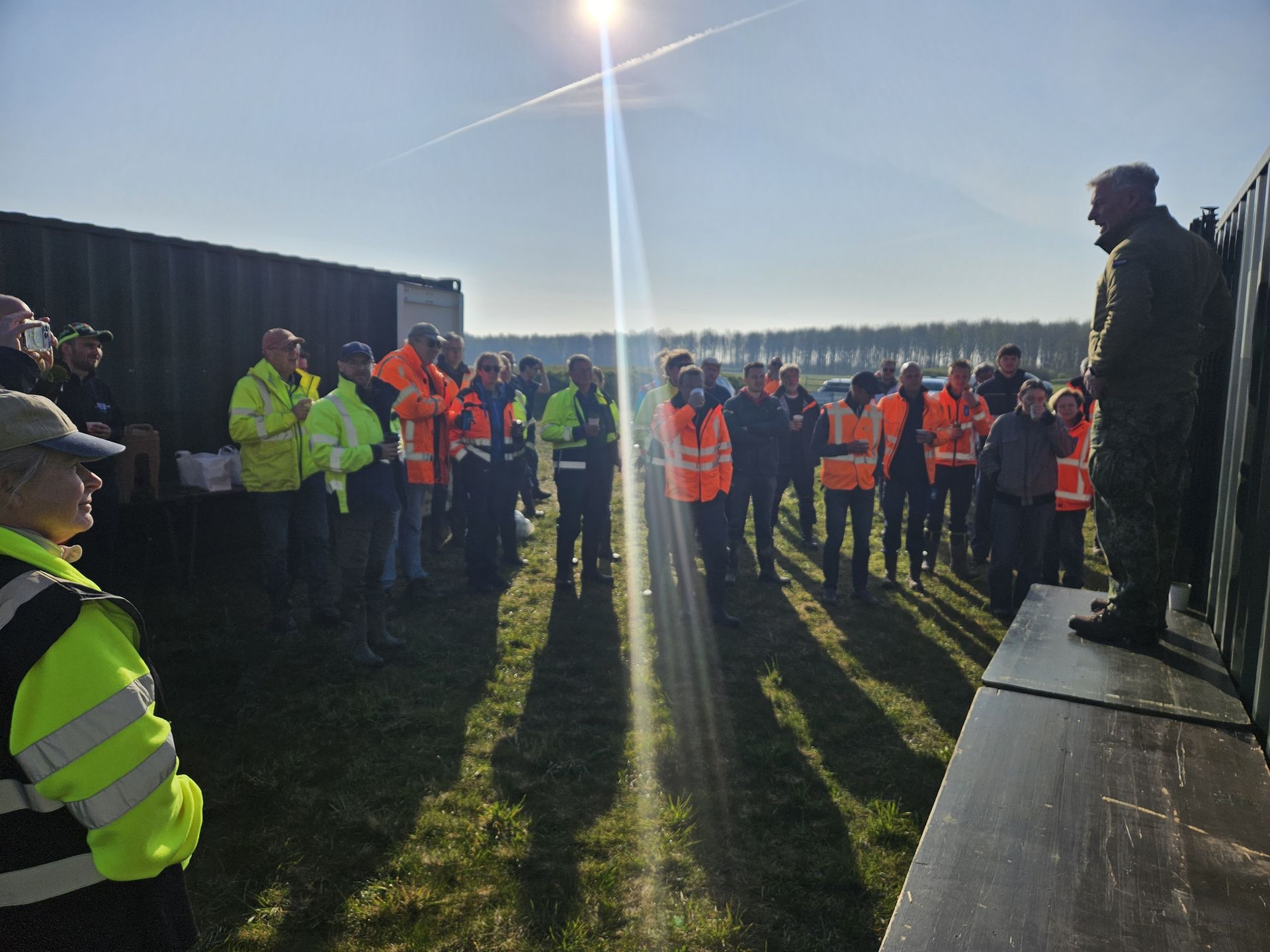
The team from Tuesday
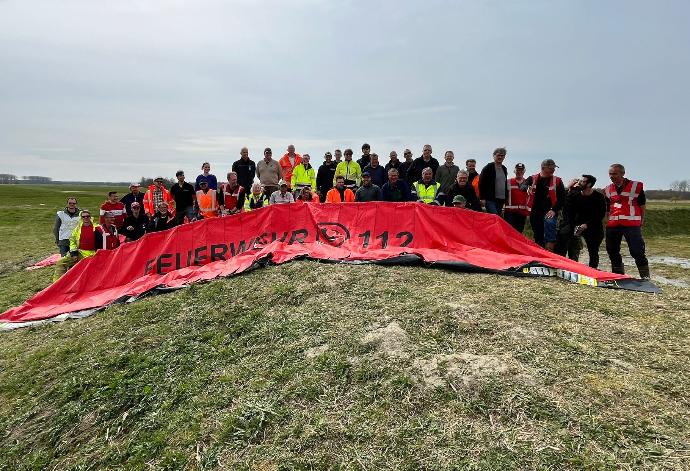
The team from Wednesday
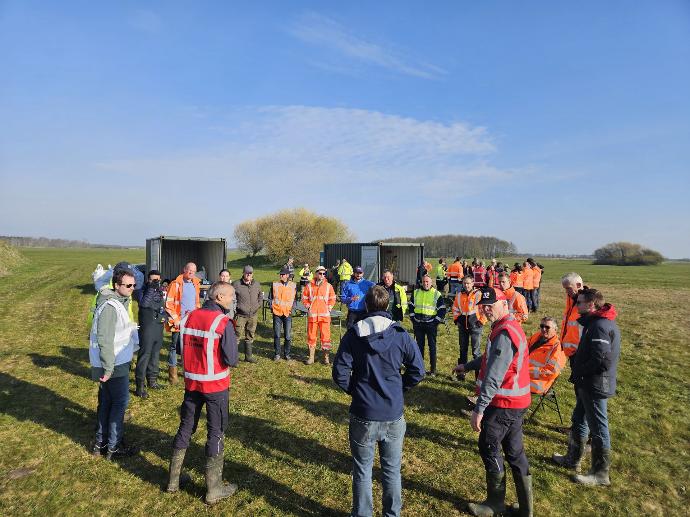
Evaluation during the field days