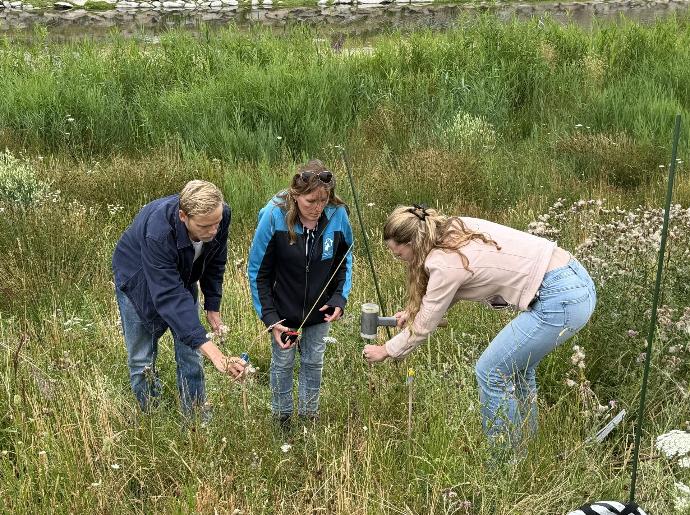
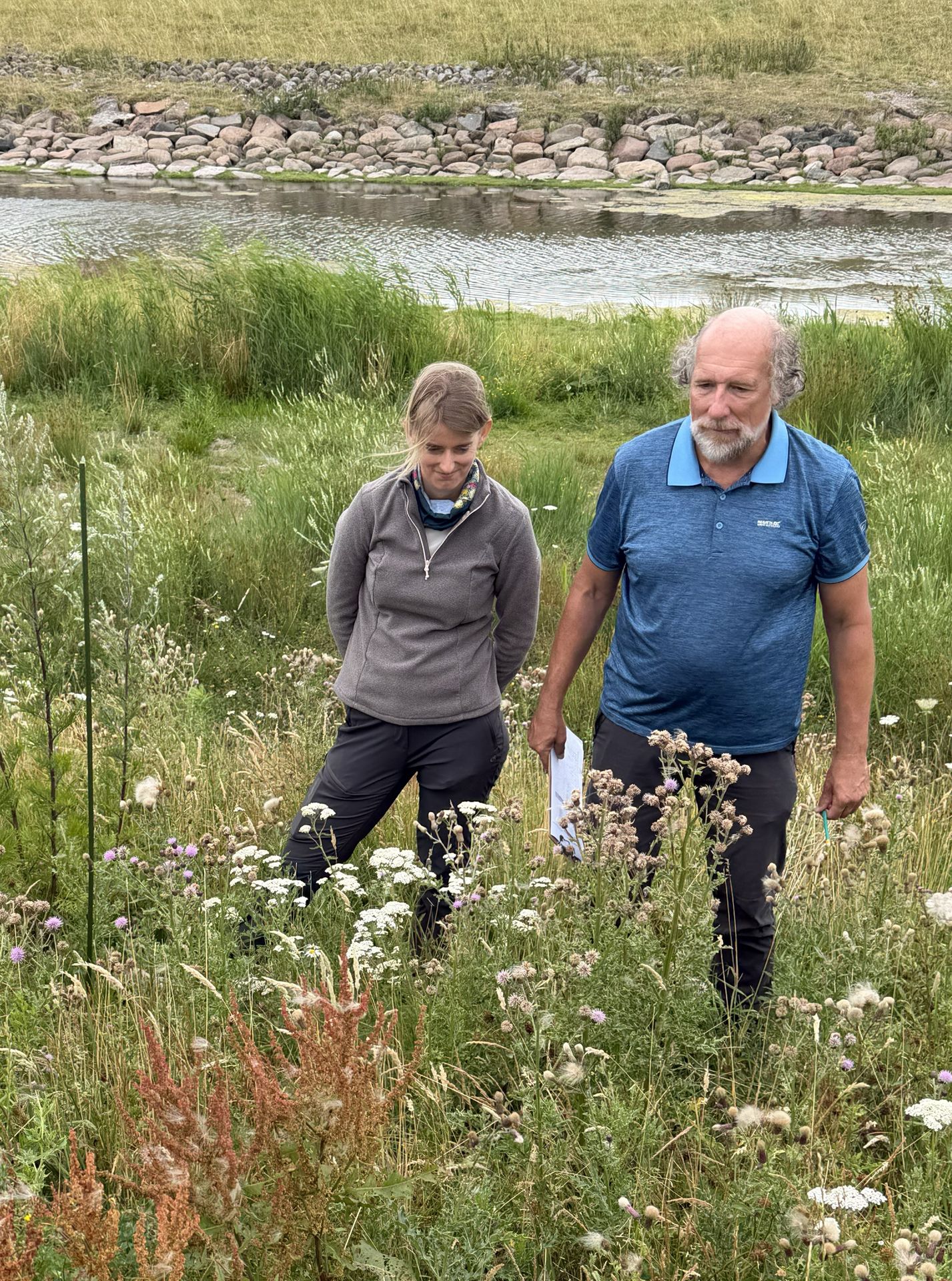
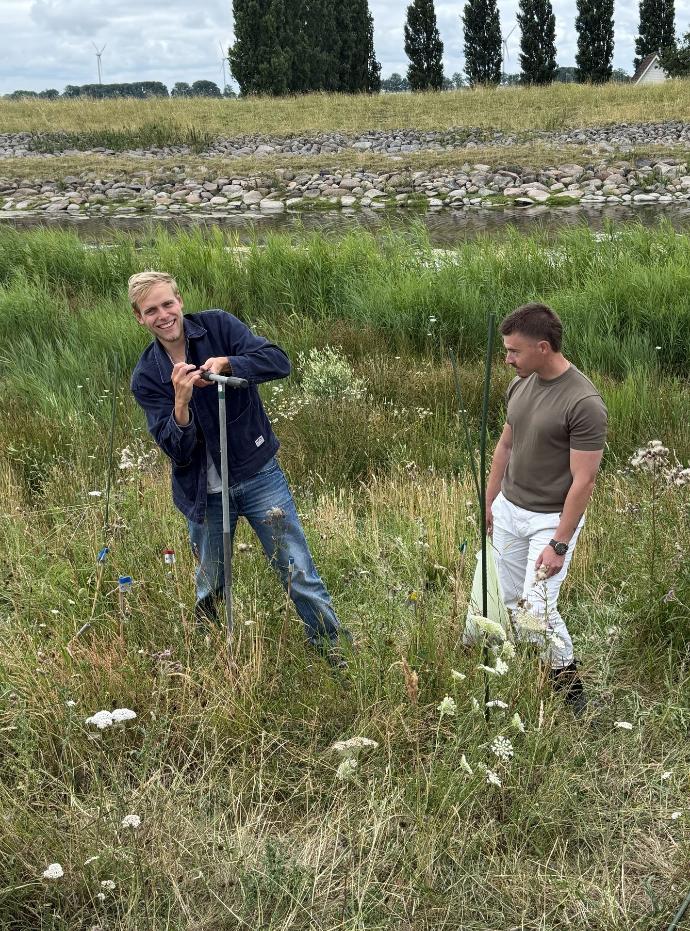
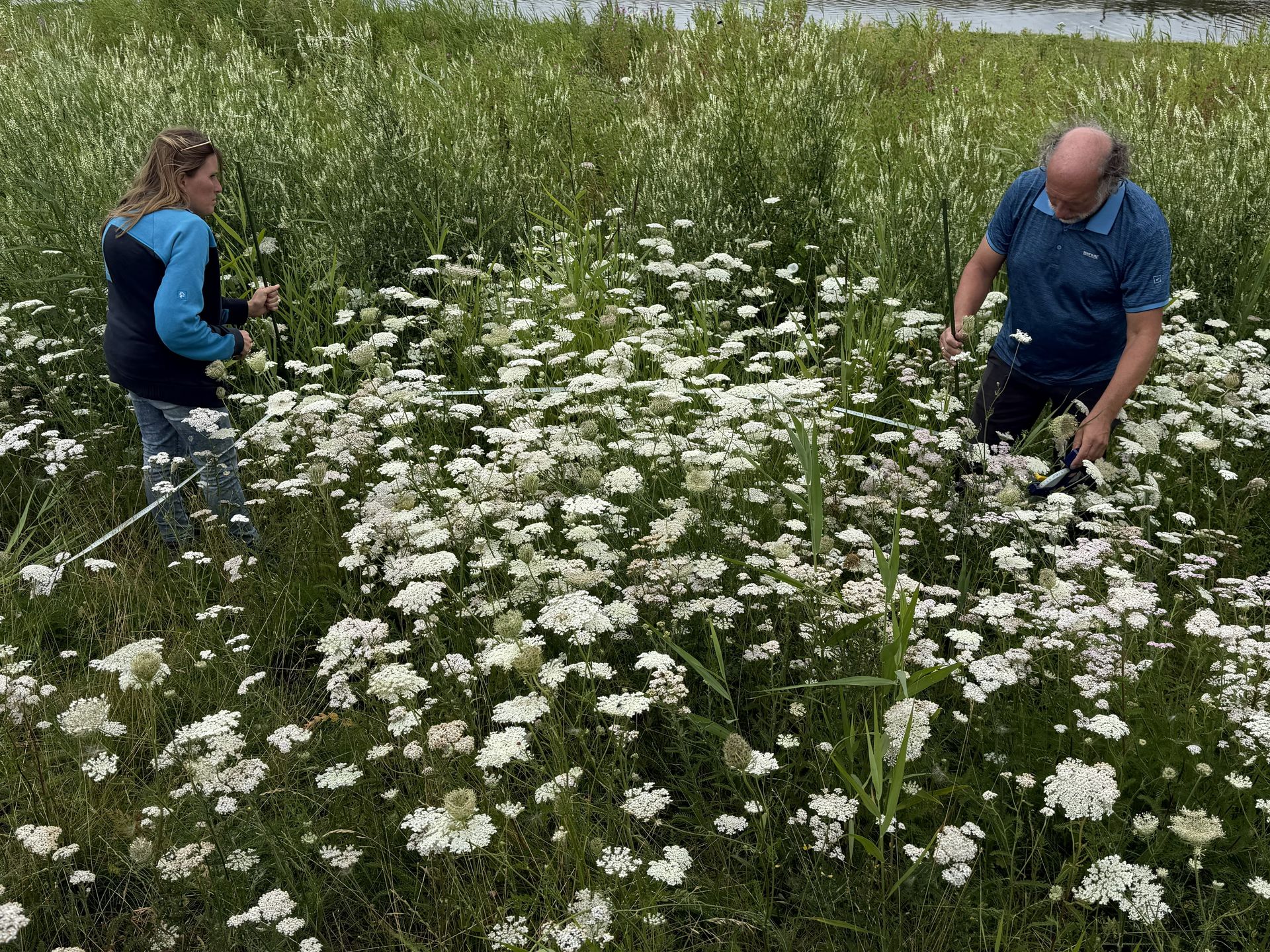
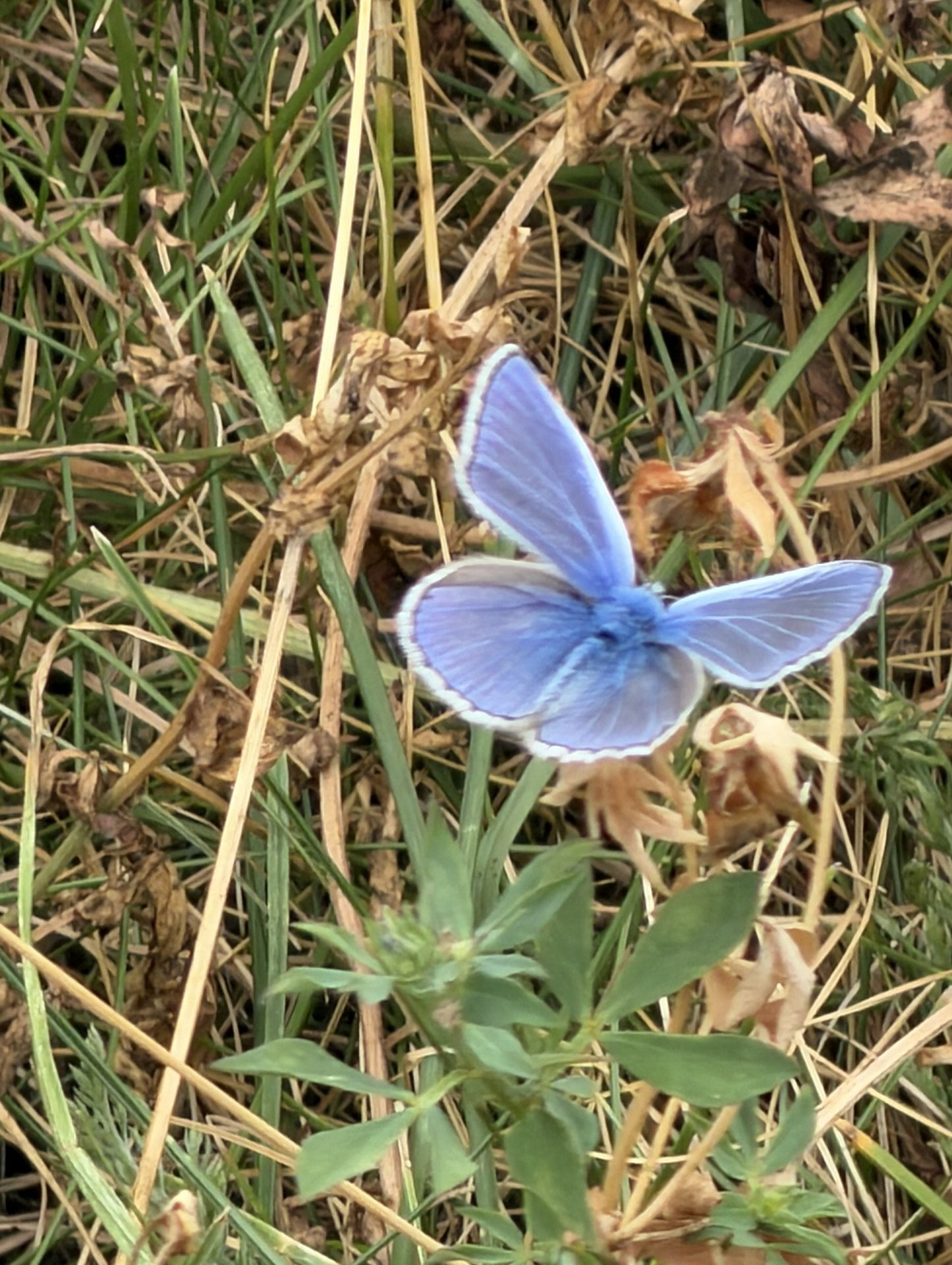
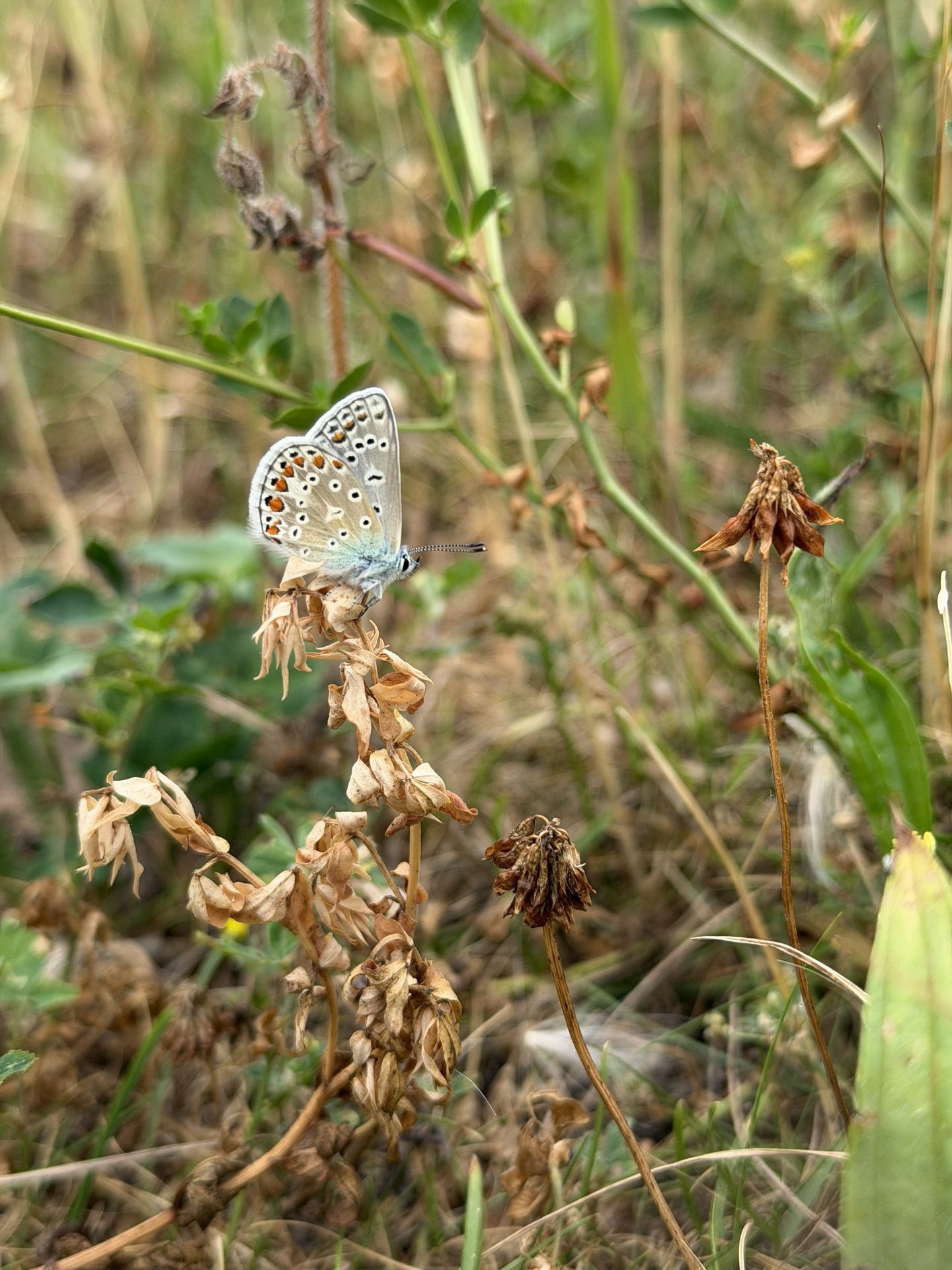
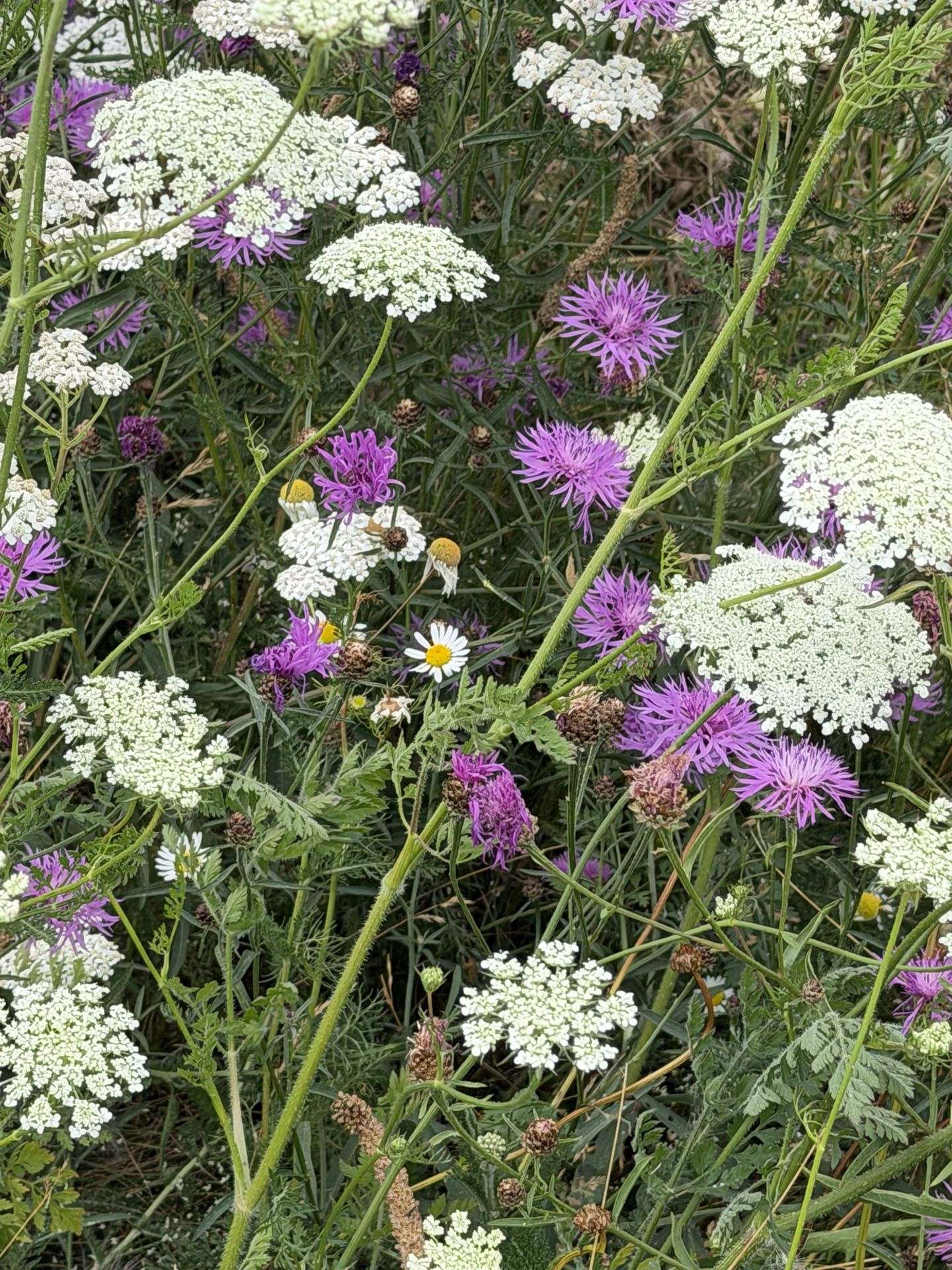
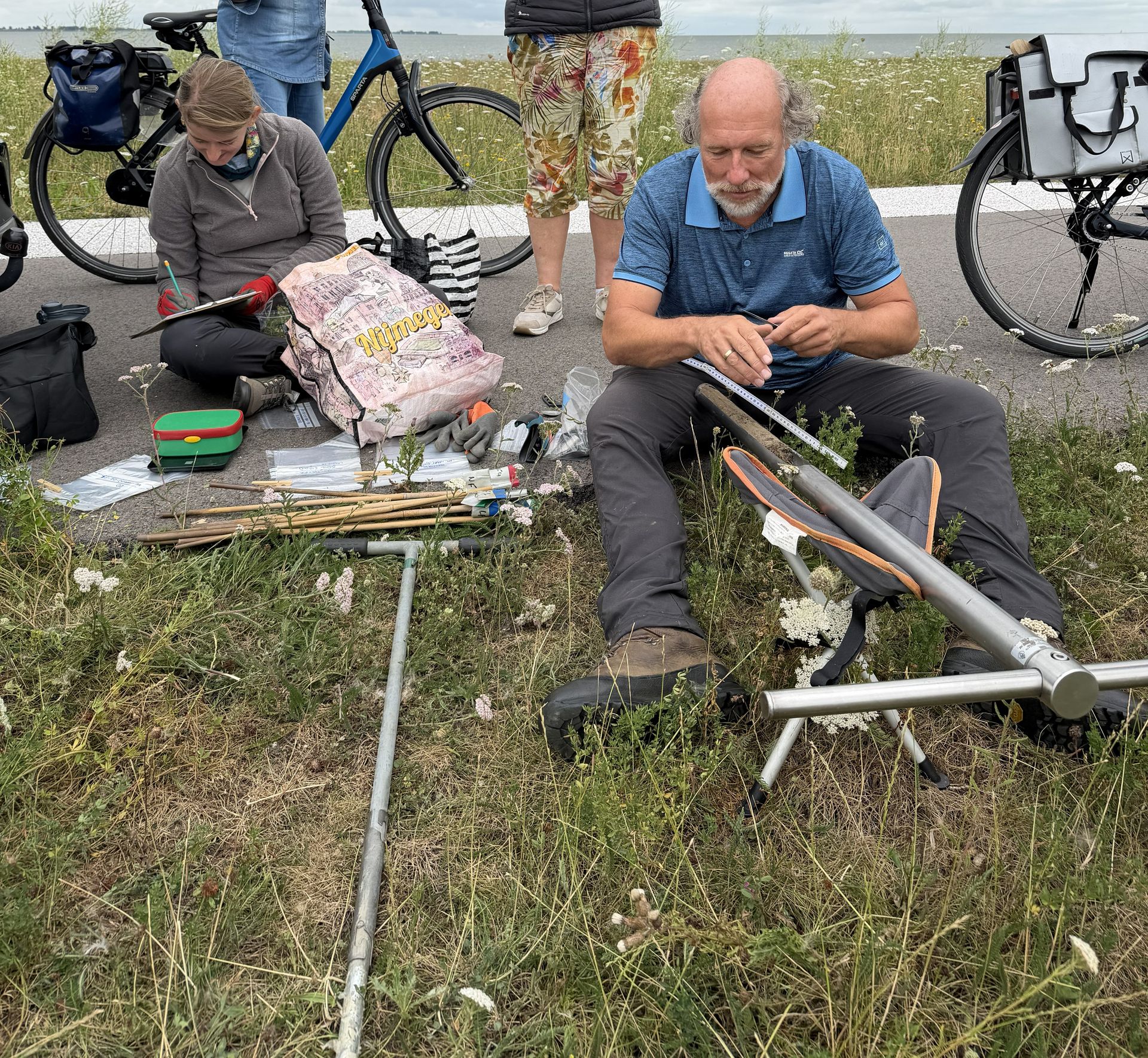
On July 8th 2026, a team of Bonsai colleagues made a field visit to the Bonsai test site Oeverdijk and got to work.
It might look like a purely local scene: researchers meticulously studying the soil and blades of grass at the Oeverdijk. But appearances are deceptive. This fieldwork is a vital link in a large European network. It contributes directly to the Interreg North-West Europe project BONSAI. Together with 17 organizations from the Netherlands, Belgium, Germany, and France, work is being done here to build the water safety of the future.
Under the inspiring leadership of Eric Visser and Anna Maria Visscher from Radboud University Nijmegen, we—Richa Nanne, Dion Westerhuis, Rosanna van den Hoonaard, Joost Langedijk, and Ilona Evers—joined in to experience, observe, and photograph the fieldwork.
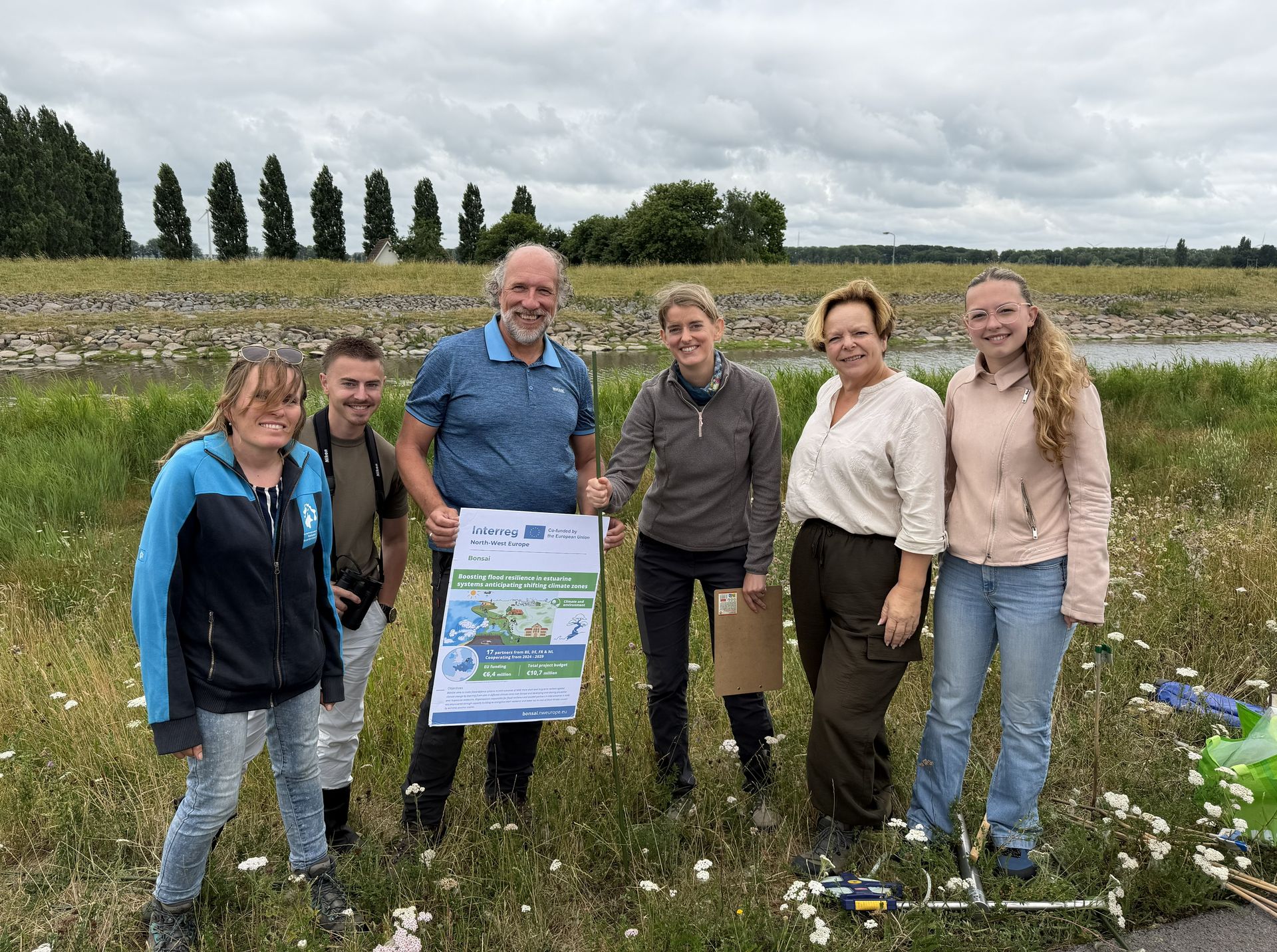
from left to right: Richa Nanne, Dion Westerhuis, Eric Visser, Anna Maria Visscher, Ilona Evers, Rosanna van den Hoonaard
Learning from the South
The climate is changing, and we are feeling the effects. A key premise of the BONSAI project (Boosting flOod resilieNce in estuarine Systems Anticipating shifting clImate zones) is that the extreme climate conditions currently seen in Southern Europe could well become the reality in Northwest Europe within a few years. Examples include prolonged droughts and heatwaves, as well as increasingly frequent heavy rainfall.
How do our familiar grass dikes respond to these new extremes? Answering that question requires data—and that data is currently being collected at the Oeverdijk.
The power of the root
Armed with an innovative research method developed by Anna Maria Visscher and Eric Visser (Radboud University Nijmegen), the researchers are meticulously examining the dike from the inside out. They are analyzing soil quality, root depth, and the specific plant species present. Together, these pieces of the puzzle answer one crucial question: how well does the grass cover withstand erosion when the weather turns?
Green bodyguards: Nature-based solutions
Instead of simply reinforcing dikes with concrete or asphalt, the BONSAI project focuses on nature-based solutions—making smart use of nature. After all, plants and natural processes can make a dike far more resilient in the long run.
In this context, biodiversity is not just a 'nice-to-have' feature, but an absolute necessity. A dike with a rich variety of plants and deep root systems is far better equipped to withstand the elements. Thanks to measurements taken at the Oeverdijk, we will soon be able to predict exactly which grass and plant mixes are best suited to withstand the droughts and torrential downpours of the future.
From local soil to European strategy
Although the researchers have their feet firmly planted in the local soil, the impact of their work extends far beyond national borders. The results from the Oeverdijk site will eventually be compared with data from other test locations across Europe, creating an international database rich in valuable knowledge.
The ultimate goal?
To develop concrete action plans and strategies that enable the whole of Northwest Europe to fortify its flood defenses against climate change—for both the short term and the distant future.
Building blocks for the future
The research at Oeverdijk beautifully demonstrates how local science and European ambition go hand in hand. Oeverdijk thus serves as the prime example of the latest generation of water safety: smart, green, and future-proof!