Wave impact tests
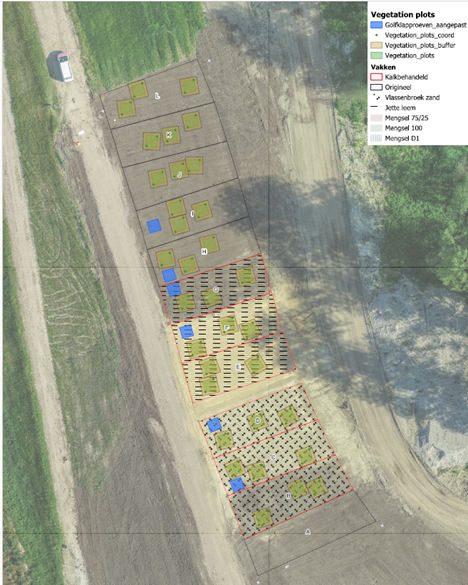
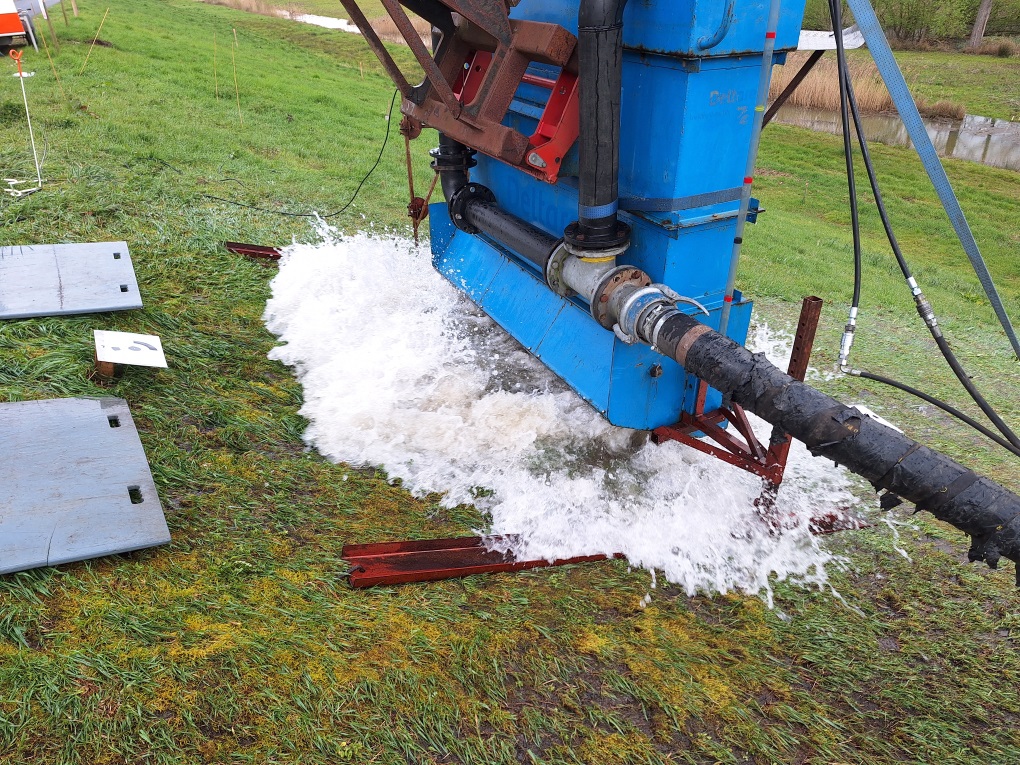
At The Bonsai test site Vlassenbroek wave impact tests will be executed by INFRAM HYDREN nv at 6 test sections using the wave impact generator of Rijkswaterstaat. The wave impact generator, is two meters wide, has a capacity of 1 m³, has a double trap valve, and is attached to a mobile crane. The valves of the wave impact generator are hydraulically controlled. To best reproduce the natural variation in impact location, the impacts to be simulated are applied at three different positions within the test section: top, middle and bottom.

The spacing of the three positions is 0.4 m (measured along the embankment). Per position, 20 impacts are simulated. After the last impact at the upper position, the generator is moved by a mobile crane to successively the middle and lower positions. After the last impact at the lower position, the generator is moved to the upper position again. One cycle thus consists of a total of 60 impacts. To prevent up-and-down movements of the generator, it is equipped with height-adjustable, hinged support legs. These support legs are guided over a rail fitted on either side of the test section. The wave impact generator allows to a certain extent to simulate a natural wave field with a significant wave height of 0.6 m - 0.7 m and a peak wave steepness of 0.045 - 0.055
Grass pulling tests
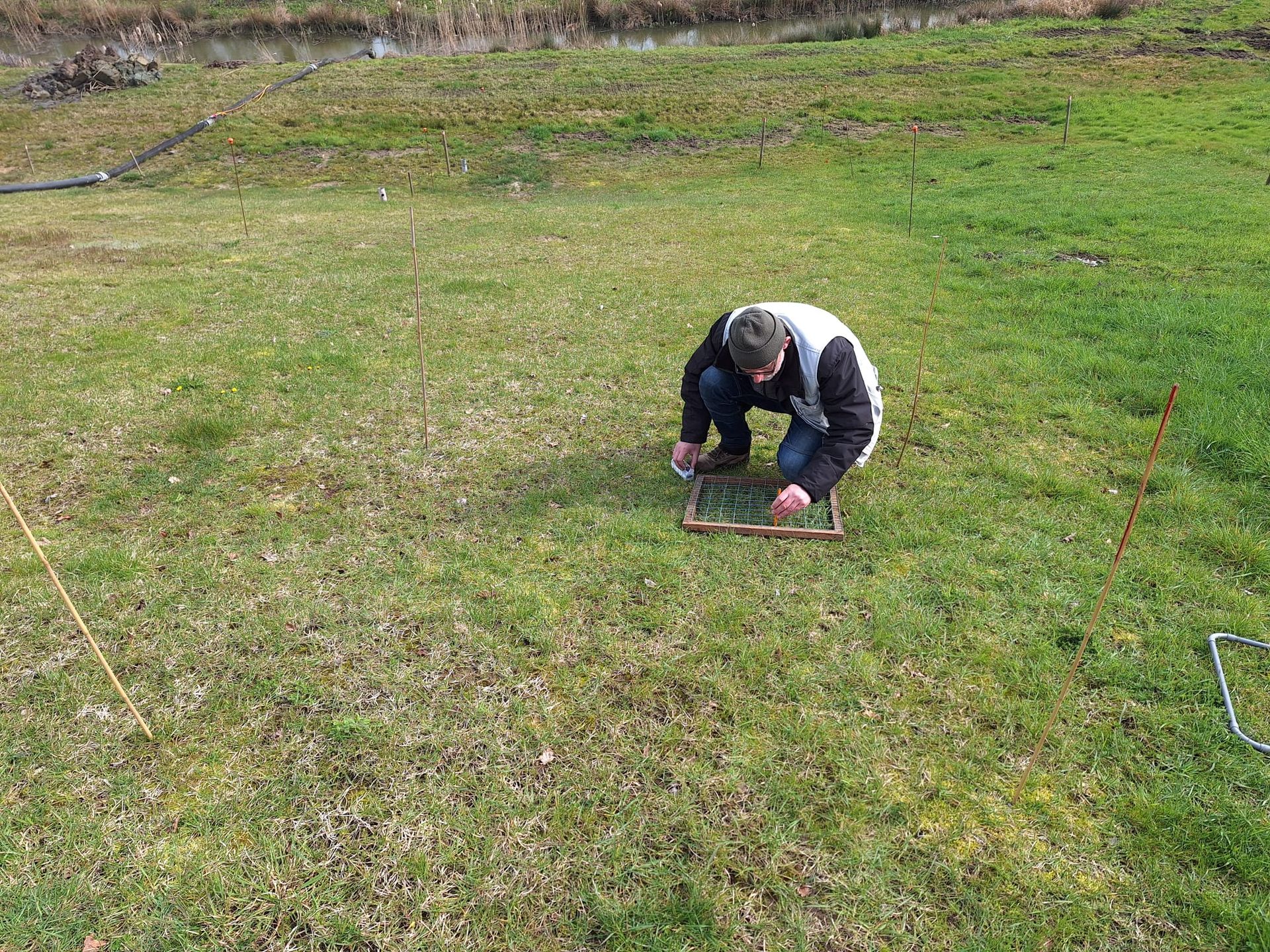
Within some test stretches, grass pulling tests will be carried out to assess the pulling force of water on the grass sod. The pulling force on the grass sod is an important parameter for wave overtopping on a grass cover but less for wave impact. The results of the grass pulling test will mainly be used for comparison with grass pulling tests executed at other pilot locations within the BONSAI project.
Relation to other pilot actions within the Bonsai project
Before and after the execution of the wave impact tests on the different test sections, the vegetation monitoring is executed to assess the impact of the waves on the vegetation. Soil samples will be taken for the execution of some small-scale erosion tests, e.g. tests with the Erodimeter. Comparison of results of small-scale erosion tests with the results of the large-scale tests will be used to identify a framework for levee cover erosion. Results of the wave impact tests will also be used to compare with wave impact tests executed at the reference site of Falsterbö in Sweden.
Want to know more about the tests at Vlassenbroek or are you interested in visiting the test location, please follow this link: https://bonsai.nweurope.eu/activities