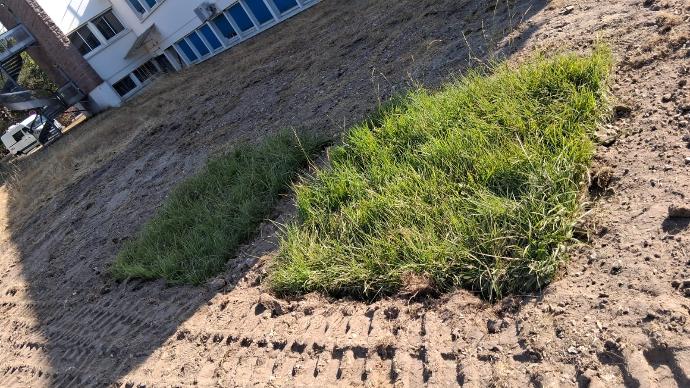
What is going on......
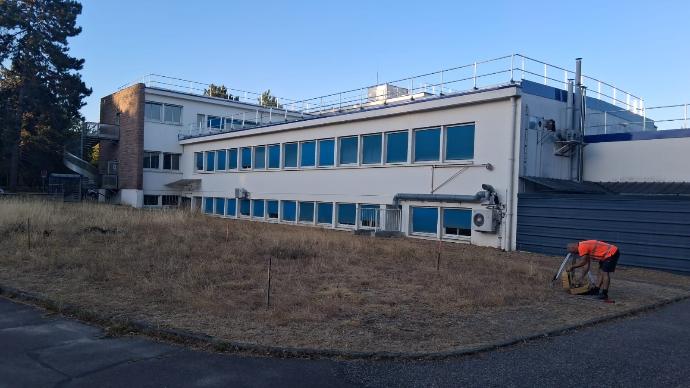
Early in the morning somewhere in Normandy...... No birds are singing, except a woodpecker in the distance. Everybody is asleep. Or, almost everybody.
People working.
A hole appears........
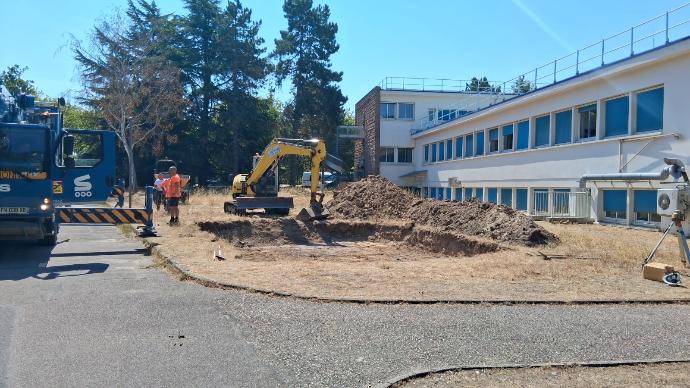
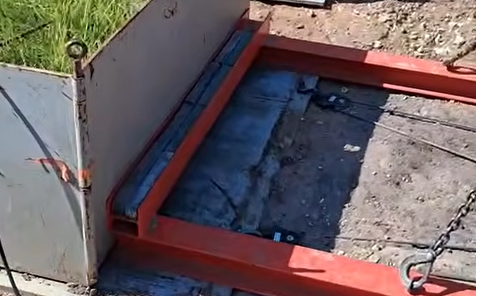
And mysterious engineering concepts are set up.
And suddenly, in the middle of nowhere, Dutch vegetation promises sustainable future in France.
BONSAI is testing Dutch Clay with Grass cover in the weather conditions of France.
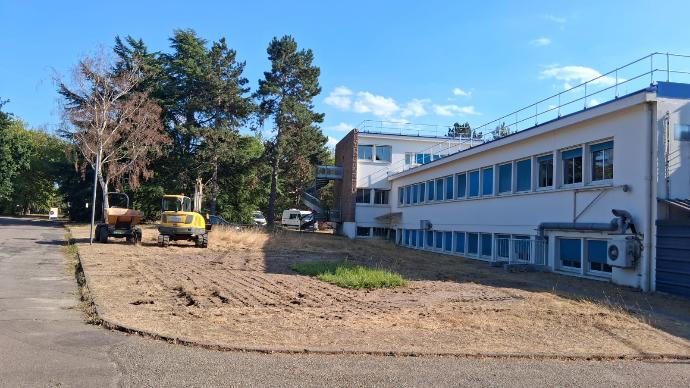
From the Netherlands to France:
Dutch Dike Cover Put to the Test
How will the grass cover of a Dutch dike cope with the warmer and drier climate we expect in the decades ahead? Within BONSAI, we do not have to wait for the climate to change to find out. Instead, we take the dike to a different climate.
In August 2026, two blocks of Dutch soil with their vegetation intact were transported from the Netherlands to Normandy in France, where our partner Cerema placed them in the ground. The blocks come from the work of Waterschap Noorderzijlvest, which is testing how dikes can grow along with rising sea levels by applying sludge to the grass cover (read more about the Meegroeidijk).
In France, the clay blocks will be exposed to different weather conditions than at home. By following how the vegetation develops there, and comparing it with the same vegetation in the Netherlands, we learn how well Dutch grass covers can withstand a changing climate.
This experiment shows one of BONSAI's core ideas in practice: simulating shifting climate zones. By exposing northern dike materials to southern conditions, we learn today what our flood defences may face tomorrow.
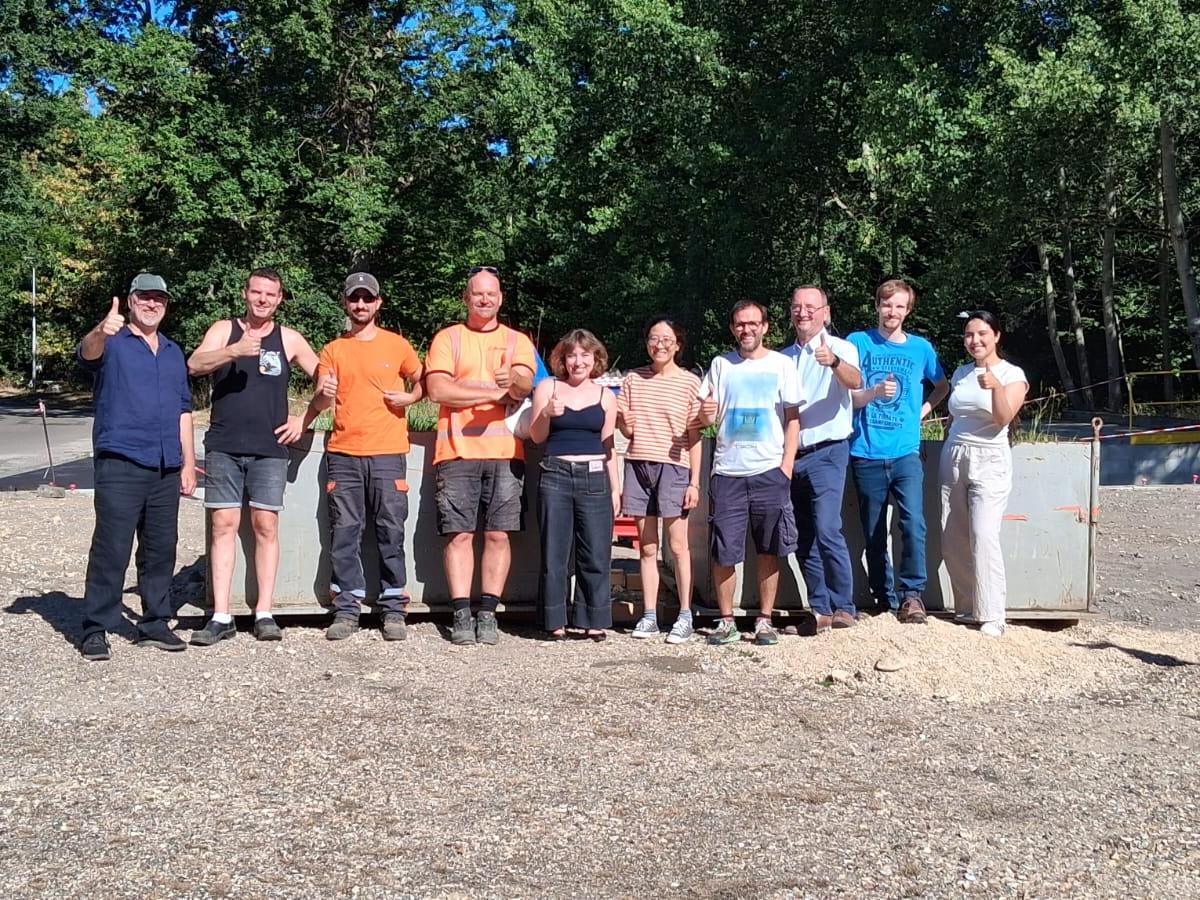
Team
A lot of planning and time was put into this experiment. The team of Cerema and Noorderzijlvest together with the contractor did a great job.
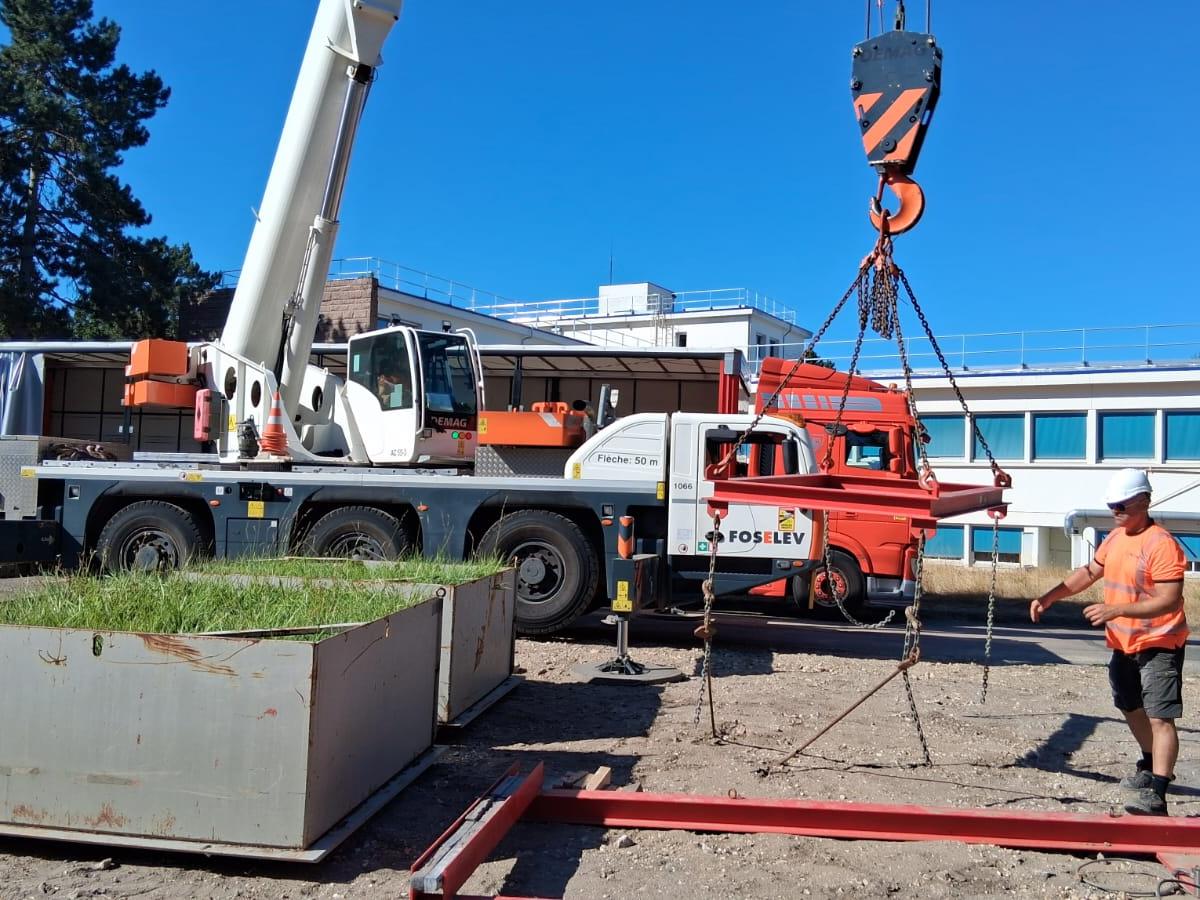
Crane and Grass
Before the blocks can be placed. Careful transport and handling of the soil with grass is essential.
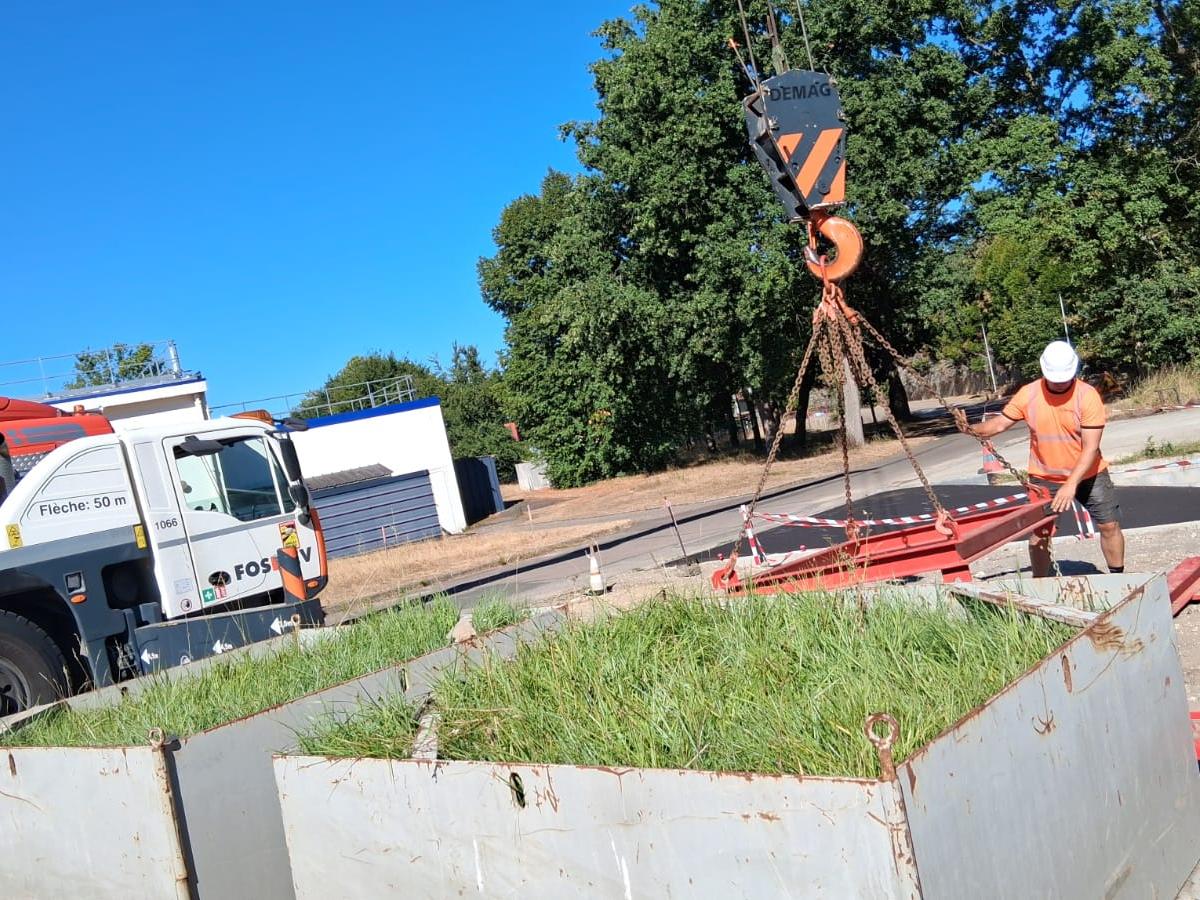
The real test starts
Now the clay with the grass cover has arrived the real test begins
Good luck in your new home
Stay tuned for the outcome of this experiment